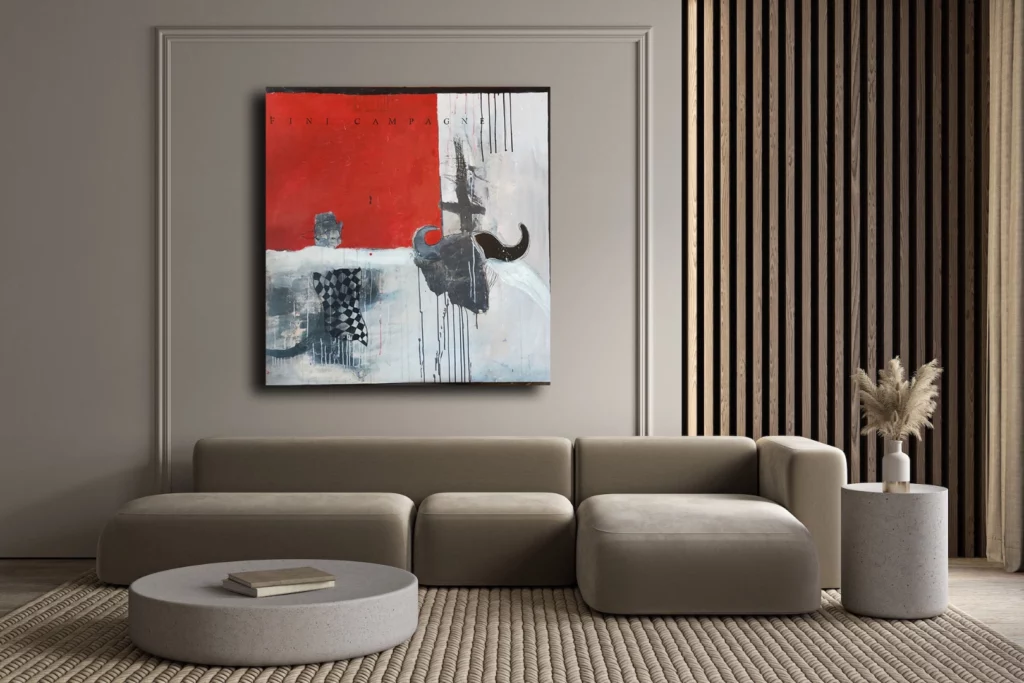
Did you know that in 1991, an aerospace engineer broke free from the shackles of technical rigour to embrace the silence of the workshop after coming perilously close to the abyss of illness? Faced with this sudden upheaval, you might wonder how such an ordeal could transform pain into a work of such delicacy.
This article sets out to decipher the visual poetry of the painter Philippe Croq, by exploring the vibrant dialogue between ink and memory that animates each of his canvases. We shall take stock of this unique artistic journey, in which mounted paper becomes the vessel for a resilience that has been recognised with the prestigious Charles Oulmont Prize.
Throughout the career of the painter Philippe Croq, there is a unique way of being reborn
In 1991, Philippe Croq left the aerospace industry following a serious illness to devote himself to painting. This resilience, recognised with the Charles Oulmont Prize in 2011, defines a raw body of work rooted in both survival and poetry.
There is a pivotal moment when destiny shatters to make way for a new light.
The turn of the year 1991 as a turning point
The year 1991 marked a sudden turning point. Illness then forced him to bring his technical career in aeronautics to a definitive end. Silence suddenly replaced the roar of the engines.
Painting emerges as a means of survival. In the urgency of regaining one’s breath, art becomes an immediate lifeline. It is a vital necessity.
This action is not a career choice. It is an inner compulsion. The paintbrush now takes the place of precise calculations.
Institutional recognition through the Charles Oulmont Prize
In 2011, he was awarded the Charles Oulmont Prize. This prestigious award, organised by the Fondation de France, offers official recognition. It crowns eighty years of quiet and tireless creative work. His hard work has finally paid off.
This award confirms the strength of his artistic approach. Philippe Croq never succumbs to fleeting fashions. His painting makes its mark through its own evocative power. In it, one perceives a raw truth.
A journey that does not tear a person away from their past, but reveals it
But this change in lifestyle does not mean forgetting one’s old ways of thinking; quite the opposite, in fact.
Abandoning engineering plans in favour of the poetry of gesture
In his transition from aerospace to canvas, a technical rigour persists. The stroke now takes the place of the straight line. Yet the engineer takes a back seat to the painter.
Pure sensations take precedence over pinpoint precision. Emotion then becomes the new guiding force. The movement is finally freed from all constraints.
Human nature has not fundamentally changed. In fact, people have simply changed the means by which they express themselves in order to tell their stories.
Rebirth through protective self-education
His unique career path is rooted in a fervent and liberating self-education. He never attended traditional art schools. This freedom from constraints has enabled him to maintain a fresh perspective.
This radical independence safeguards his profound authenticity. He never seeks to please the establishment, preferring instead to follow his inner vision. That is where his truth lies.
This creative solitude is his greatest strength. It ensures that his painting is unfiltered and uncompromising, like a bridge between his soul and you.
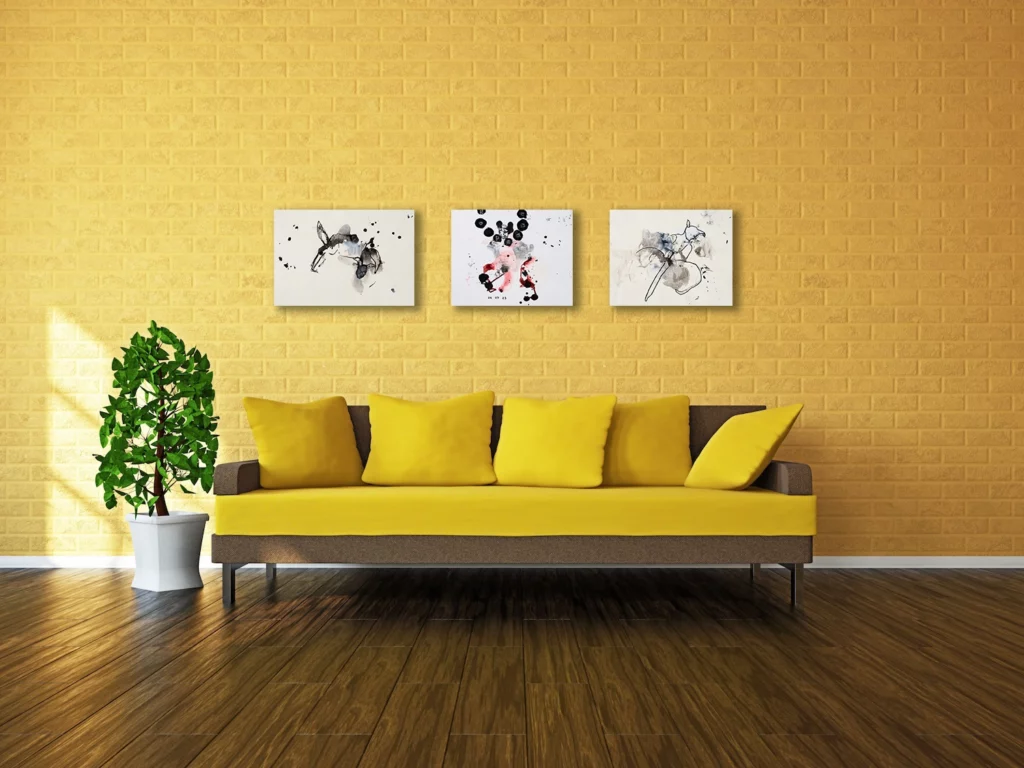
The urgency of painting as a breath of uncompromising freedom
Consequently, this freedom translates into a creative rhythm that leaves no room for doubt.
Painting as an immediate, vital necessity
The brush precedes analysis. Intuition guides every stroke. This intuitive process sets the stroke free.
The canvas absorbs the tension. Pain becomes creation. This emotional driving force transforms the trauma.
Painting is vital. Without it, the balance is thrown off.
Rejecting conventions in favour of raw expression
The line is spontaneous. The artist reveals their vulnerability. This artistic truth leaves no room for second thoughts.
The painting is direct. It rejects artifice. This raw expression makes a powerful impression on you.
Sincerity prevails. The work then becomes powerful.
Silhouettes that seem to emerge from obscurity and emptiness
Yet this fervour for painting eventually gives rise to recognisable forms, almost ghostly in nature.
Deconstruction, straddling figuration and abstraction
There is, in the bodies that inhabit his works, a unique way of suggesting existence. These often incomplete silhouettes populate the canvas with an almost melancholic discretion.
Form struggles against its own obliteration in a constant interplay of appearance and disappearance. This evanescent representation does not rescue the being from oblivion: it reveals it in a precarious balance.
The white of the canvas is never simply an absence. This void is just as vibrant as the subject itself.
The secret symbolism of numbers and embedded words
Numbers and words emerge as essential points of reference amidst the pictorial chaos. These graphic symbols anchor your gaze and provide a structure for pure emotion.
These intimate additions transform each painting into a visual diary. They unfold a cryptic narrative that you must whisper.
To embrace the tangible quality of mounted paper
In short, for these signs to exist, they must be based on a foundation that is both solid and fragile.
Uncertain texture as a field of experimentation
The choice of paper mounted on canvas is essential here. This medium absorbs ink in a unique way, thereby allowing for rich and deep layers.
One can then sense the apparent fragility of this texture. One can feel the layers and the thickness beneath one’s fingers. It is a living material.
This technique has a profound effect on the final result. The unpredictability of the paper is an integral part of the work.
The interplay between fine ink lines and solid areas of acrylic paint
The contrast between the ink and the acrylic creates a visual vibrancy. The black line provides the necessary structure. The colour evokes an emotional response. The whole piece then seems to come to life before your eyes.
Here is what makes up this chord :
Bridges between classical chiaroscuro and sonic rhythms
But this technical mastery did not come out of nowhere; it has its roots in a rich culture.
The influence of the old masters on dramatic lighting
Croq’s shadows are inspired by chiaroscuro. The light is theatrical. His paintings evoke the power of Caravaggio or the directness of Manet.
This culture fuels its modernity. It does not copy; it assimilates history.
The rhythm of the music as a guide for the brush
In the privacy of the studio, the tempo dictates the speed of the arm. The movement becomes an instinctive dance. The rhythms of the music lend a distinctive cadence to his hand. The brush then comes to life in time with the musical chords.
His work captivates with its raw poetry. Each piece finds its place in a refined and vibrant contemporary interior.
It is a painting that stays with you for a long time. The final impression is an invitation to dream.
Philippe Croq’s work, blending resilience with marouflage, transforms a life-changing event into a cryptic narrative of rare intensity. Seize this opportunity now to incorporate this visual resonance into your contemporary interior and perpetuate its poetry. Let yourself be swept away by this still journey, where every silhouette becomes a mirror of your own eternity.