Raku, refractory concrete and archaic forms: a portrait of a master of contemporary French ceramics.
There are ceramicists whose style is instantly recognisable without the need to read their signature. Camille Virot is one of them. For over fifty years, she has been crafting rough, earthy and deeply rooted ceramics that turn their back on superficial glamour. Her bowls, heads and bracelets are born of fire, stone and the artist’s hand. At the Galerie Art Mourier, we are delighted to present her work.
Camille Virot was born on 1 July 1947 in Calmoutier, in Haute-Saône, in the Franche-Comté region, where one learns from an early age to observe stone and the landscape. He enrolled at the École des Beaux-Arts in Besançon, initially in the architecture studio. In 1968, he turned to ceramics. He then continued his training at the Strasbourg School of Decorative Arts.
He set up his studio in Haute-Provence, in La Rochegiron, in the Banon region. This landscape of limestone, lavender and stark skies inspired his work. From the late 1960s and early 1970s onwards, he took up raku, a technique he would never abandon.
Raku is a firing technique that originated in Japan in the 16the century, linked to the tea ceremony. The piece is removed from the kiln whilst still red-hot, then subjected to a thermal shock and a reducing atmosphere. The result is unpredictable: crackling, deep blacks and matt surfaces.
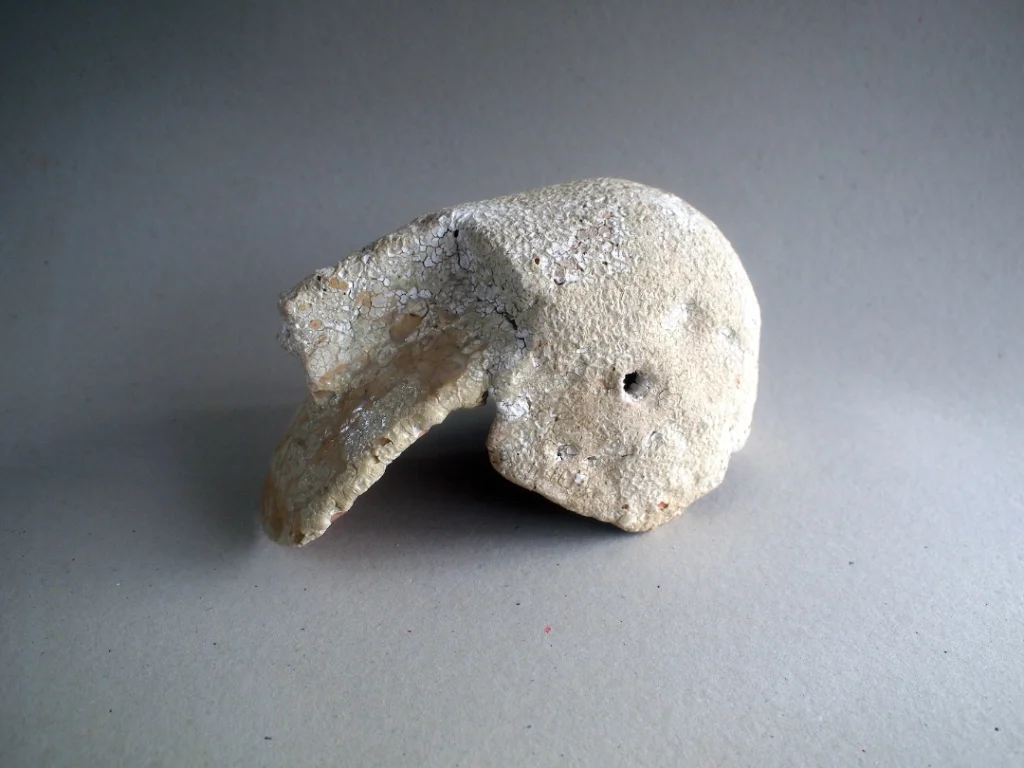
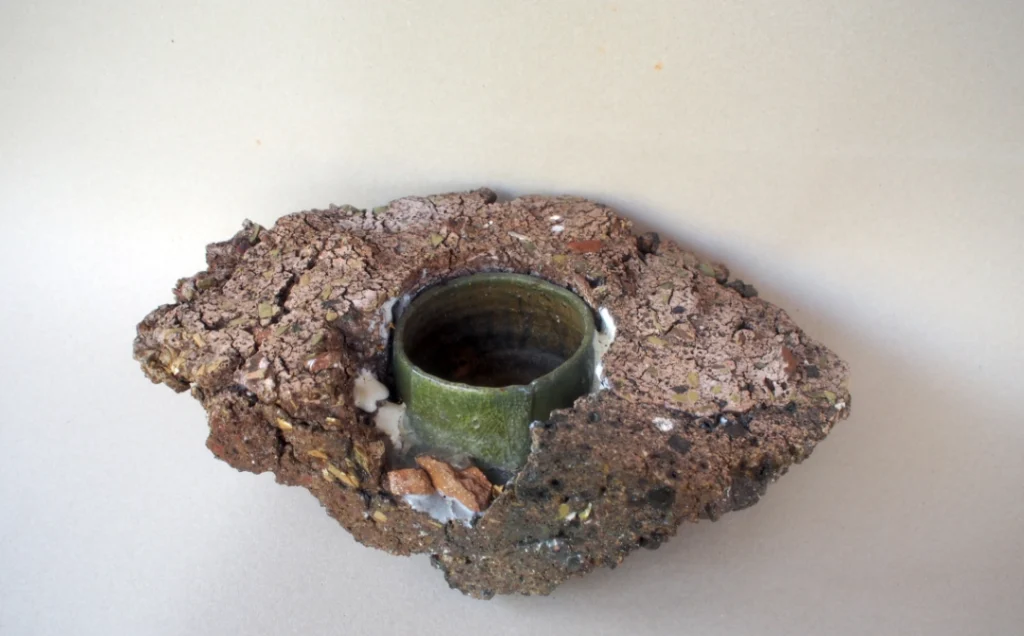
Camille Virot does not simply adopt this legacy as it stands. He uses it as a foundation upon which to build his own artistic language. Since 1990, he has been combining clay with other materials: refractory concrete, granite, molten basalt, fragments of glass or shards. Some of his pieces, such as the Bols-genèse, combine black raku and refractory concrete, fired at temperatures exceeding 1,300 °C. Here, ceramics meet geology.
The first thing that strikes you about Camille Virot’s work is the texture. He aims for an ‘expressiveness of the clay that is free from artifice and gloss’, in order to recapture the humility of folk pottery. The surfaces are smooth or rough, sometimes whitewashed before firing.
He works with the most ancient forms of ceramics: the urn, the jug, the bowl, the salt cellar, the brick, the tile, the box. He sets aside their function to focus on their physical presence. His vocabulary is that of the body: the lip, the foot, the skin. The bowl becomes a gesture of the hand; the head, a mineral face.
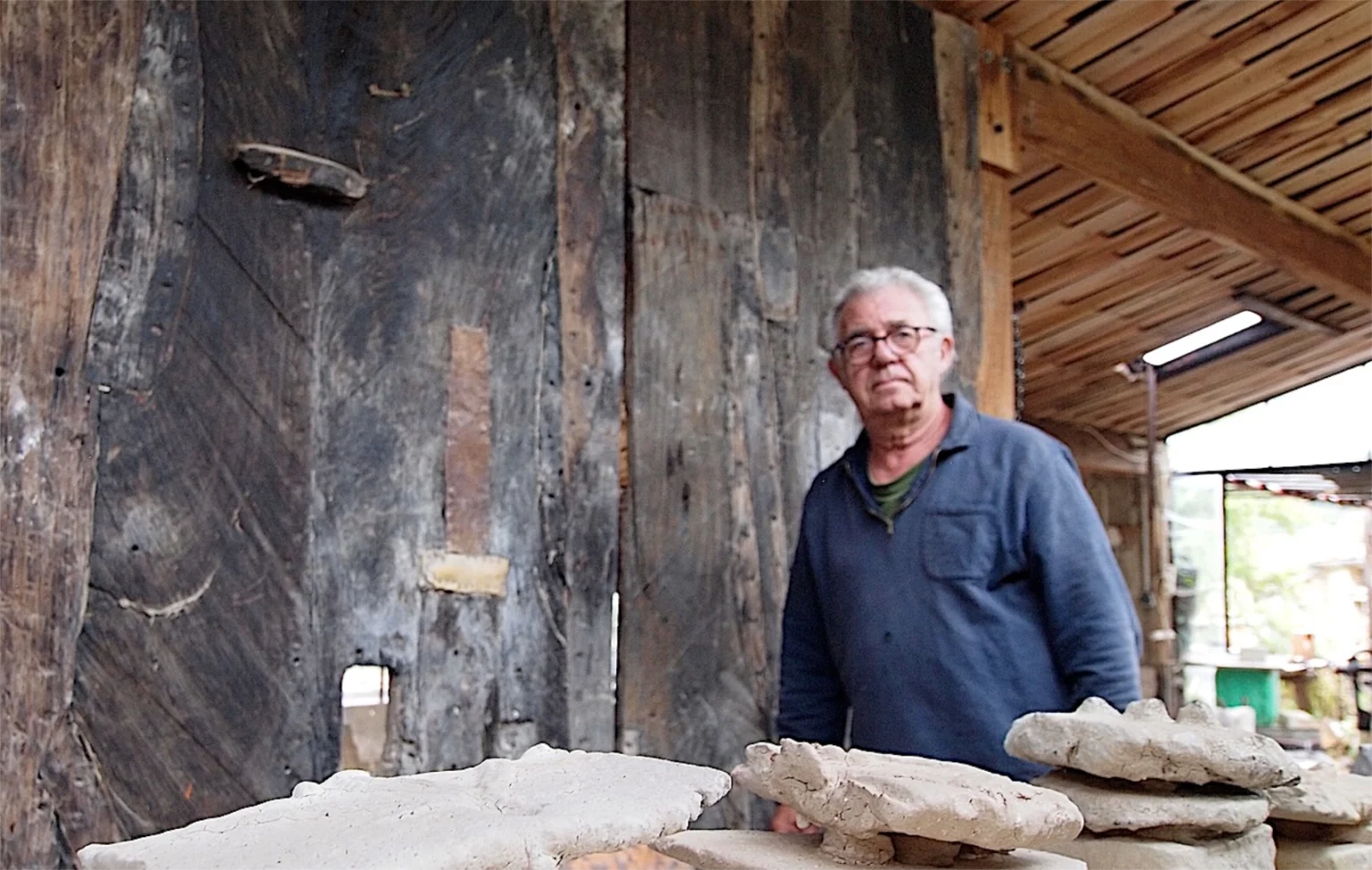
Camille Virot is also a mentor. He has been teaching at art schools since the mid-1970s. In 1985, together with his wife Pascaline Virot-Marini, he launched Dossiers d’Argile, a publication dedicated to exploring contemporary ceramics. Argile Editions, based in Banon, has also published his Dossier raku (2003) and L’atelier Camille Virot (2009).
He is one of the eight artists featured in 8 artistes & la terre, alongside Claude Champy, Setsuko Nagasawa and Jacqueline Lerat, amongst others. This book is regarded as one of the most important works on contemporary ceramics. It also served as the inspiration for the ‘Poterie nègre’ exhibition at the Musée des Confluences in Lyon.
His works are held in the collections of the Musée des Beaux-Arts de Lyon, which acquired several of his bowls in 2019, including some Bols-genèse. He has also exhibited in galleries abroad. He is recognised as a leading figure in contemporary French ceramics, alongside Jean Lerat and Daniel de Montmollin.
We present a selection of pieces that are representative of his artistic world:
In a world of smooth surfaces, his work reminds us that ceramics is, first and foremost, a material, fire and the work of the hand. Each of his pieces bears the mark of its origins, and that is what we love about his work.