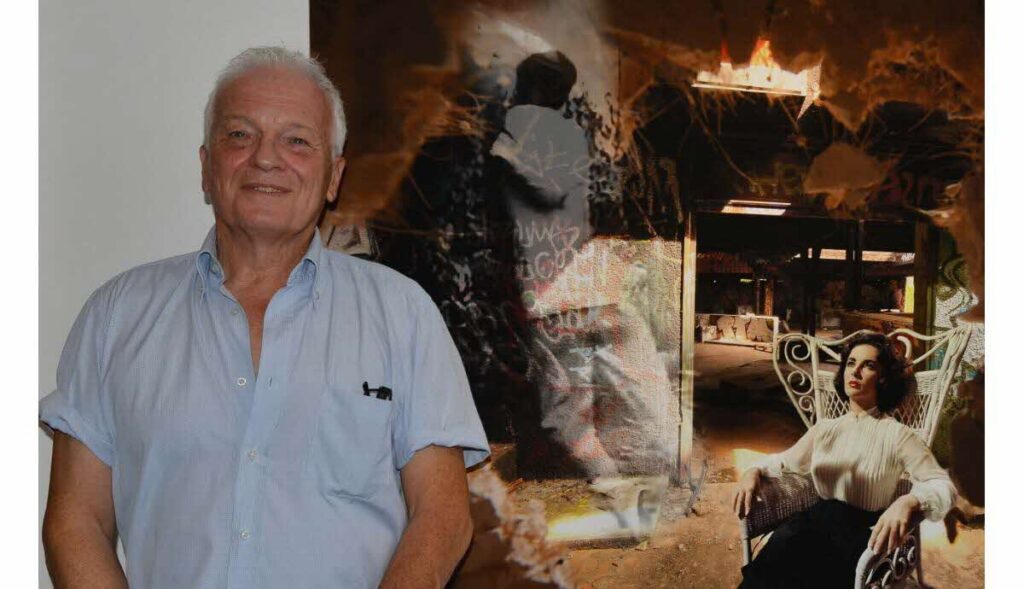
How can we truly understand the dark work of an artist who stubbornly rejects the codes of the traditional art market? This exclusive study explores Alain Schwarzstein’s technique in depth, highlighting the raw journey of this self-taught artist born in Algiers, who went from working in a factory to directing television films.
Here you will discover how his obsessions with social violence and the male body shape a unique artistic approach, combining photography, writing and documentary filmmaking.
Born in 1954, far from art schools.
It all began in Algiers, far from the salons of Paris. Alain Schwarzstein was not a product of the traditional academic establishment. He left school at a very early age, rejecting convention and marking the beginning of his independence. This break immediately propelled him into working life, without a safety net. He learned on the job, confronted with harsh reality rather than theory from books. This is what defines his unusual career path: a solitary and tenacious journey. He forged his own path.
This unconventional youth gives him a unique perspective. He does not cheat with reality.
Small jobs that shape one’s perspective.
His eye was not trained in museums, but through direct contact with materials. He observes the world as it is, without any preconceived aesthetic filters. This is where his vision began to seriously sharpen.
Before stepping behind the camera, he gained a wealth of practical experience that informed his approach.
• Labourer in a fuel oil tank manufacturing plant
• Model for sculptors
These roles instilled in him a visceral understanding of the body at work and the body as an object of art.
This raw experience forms the foundation of all his work. Nothing is simulated.
Photography as a matter of course
Becoming a photographer was not a career plan, but an absolute necessity. After observing so much, he had to capture these fleeting moments. It was the logical next step in his journey as an insatiable observer.
Images become his outlet for channelling what he has been through. If you are looking for a technical biography of Alain Schwarzstein, bear in mind that instinct takes precedence over theory. He then established himself as a professional photographer. It is his primary language.
A discreet personal life, far from Paris
The man cultivates discretion, married and deliberately settled far from Paris. He shuns the hustle and bustle of society to focus on the essence of his art. This voluntary retreat speaks volumes about his need for calm. He protects his integrity.
This distance is not only geographical, it guarantees his freedom of expression. He remains authentic, far from passing fads.
This radical choice makes his work more introspective and profound. Silence nourishes his art.
The body and the face: an obsessive photographic quest
A single theme, explored in infinite variations.
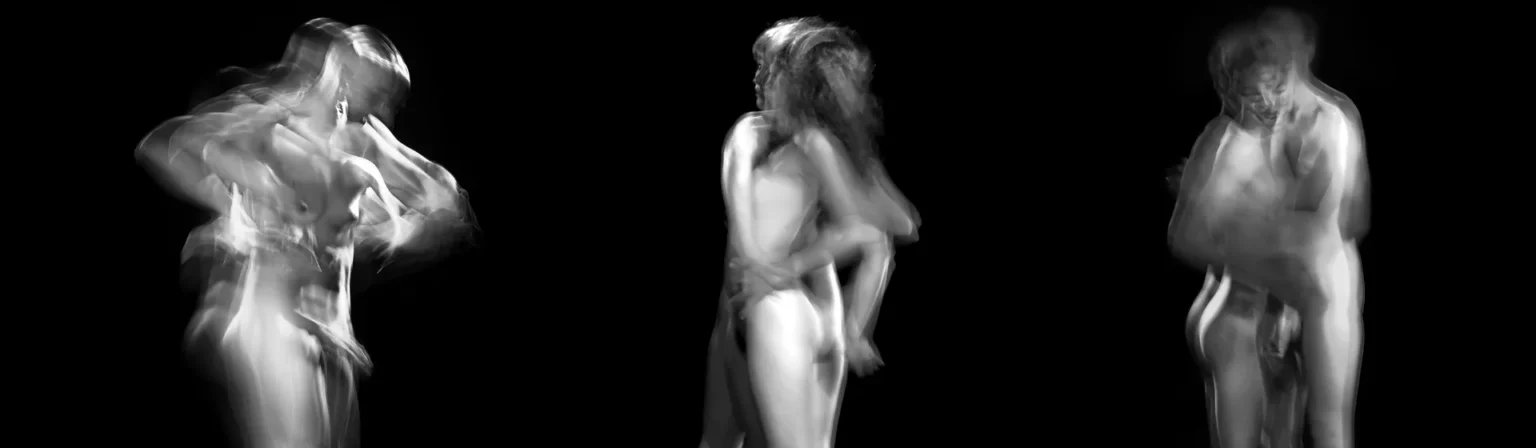
To fully grasp Alain Schwarzstein’s technique, one must understand his main obsession. His work revolves radically around two unique poles: faces and bodies. This is the absolute common thread running through his career. He looks at nothing else. Schwarzstein does not seek easy diversity, he pursues tireless repetition. He does not want variety in subjects, but variety in the incarnations of the same subject. It is a quest for the pure image. This thematic discipline commands immediate respect. It gives it all its raw power.
From flesh to graffiti: the different incarnations
But beware, “incarnation” does not mean boring or repetitive classicism here. The artist pursues the human face wherever it appears in reality. He tracks it down where you least expect it. It is a constant visual hunt.
Take, for example, his recent work on urban walls. He captures humans in tags or in flesh and blood with the same intensity. For him, a graffitied face is worth a living model. It is a contemporary vision.
Capturing raw emotion
He is not really interested in pure aesthetics, which he often finds too easy. His ultimate goal is to capture a fleeting emotion in a glance. He wants to seize that moment of truth, which is often invisible. He does not necessarily seek to analyse what he sees before him. He acts as a simple revealer, a conveyor of raw images. He captures it and shows it to the viewer. You have to make do with that. It is this total absence of moral judgement that fascinates. It makes his portraits incredibly powerful.
A serial approach as a method of exploration
His working method remains fundamentally serial, which is his trademark. He photographs the same type of face or situation repeatedly. It is an obsession that he embraces and champions.
However, this accumulation is never a simple, sterile repetition for the artist. Each photo in the series adds a nuance, a new question. It is by accumulating images that he explores his subject. He exhausts its facets until he extracts a truth.
Behind the camera: Alain Schwarzstein’s other career
But Alain Schwarzstein is not just a man of still images. His work for television is another piece of the puzzle, equally important for understanding the artist as a whole.
Entering the audiovisual industry through documentary filmmaking
Alain Schwarzstein was not content with pure photography. He entered the world of television through the demanding field of documentary filmmaking. This initial choice was by no means random. Documentary filmmaking requires scrutinising reality without cheating. It was a direct extension of his approach as a photographer observing his contemporaries. He simply changed his technical tools. His gaze remained fixed on the raw truth of people.
The director: with around twenty television films to his credit.
This is not just a Sunday hobby. Alain Schwarzstein has made around twenty television films during his career. This extensive filmography proves that he leads a true double artistic life. He is an accomplished professional in the field of moving images. Being a director offers him an immense narrative playground. He constructs complex stories that photography can only hint at. He continues to dissect the human condition. Only now, he adds movement and duration to his equation.
The screenwriter: the pen behind the image
This versatile creator has another strong string to his bow. He is also an experienced screenwriter with around thirty scripts to his name. This demonstrates a technical mastery of narrative structure that commands respect. Writing screenplays requires dissecting the psychology of characters. You have to think about dialogue and underlying motivations. This intellectual exercise inevitably feeds into the way he constructs a photographic image. Everything is connected in his creative process.
A rare and enriching dual career path
Few artists manage to excel in both fields with such ease. Mastering still images and moving images at this level remains an exception. It is an untypical dual career that deserves to be highlighted. Alain Schwarzstein refuses to choose. These two facets are not separate worlds. They respond to and enrich each other. To fully understand the photographer’s technical biography, one must understand the filmmaker. One cannot exist without the other.
When moving images feed still images.
Documentary observation applied to portraiture
Coming from the world of documentary filmmaking, Alain Schwarzstein learned early on the virtue of silence and discretion behind the camera. Whether filming restorers at the Louvre or observing working-class life, he knows how to wait for reality to reveal itself. He does not rush the moment, but waits patiently for it.
This approach defines what could be called Alain Schwarzstein’s technique. His portraits reject the rigidity of academic poses in order to capture a raw truth. One has the impression of stealing a moment of intimacy, a second of respite captured on the spot, exactly as in an uncompromising reportage.
The silent narrative of a photograph.
With some thirty scripts to his credit as a screenwriter, he understands that a single image must carry the weight of an entire story. He does not simply photograph a face; he frames a potential scene. Each gaze becomes the protagonist of a silent narrative that immediately captivates the viewer.
You instantly sense that there is a “before” and “after” outside the frozen frame. His photographs are charged with dramatic tension or anticipation, inviting the viewer to fill in the gaps. It is a work of the imagination, where the photograph serves as a trigger for personal fiction.
Directing actors and the model.
His experience as a director on series such as Nestor Burma taught him how to direct actors to elicit the right emotion. He transposes this precise technique to his photo models. It is not a question of commanding a pose, but of provoking an inner reaction. Rather than imposing a sterile “don’t move” command, he creates an atmosphere, often in the studio where he feels in control. He subtly guides the subject to help them shed their social masks. It is then that he captures that fleeting emotion, a crack or a sudden joy, which brings the image to life.
A cinematic view of the body.
There is undeniably a “cinematic eye” in his treatment of light and volume. His use of shadows to sculpt a body, whether young or marked by age, betrays a deep understanding of the moving image. He illuminates skin as one would illuminate a film set. His photographs transcend the simple status of snapshots to become stills extracted from a mental film. This fusion between filmic narration and freeze frames gives his photographic work a rare density. It is a work that still moves, even when frozen on paper.
Disturbing themes: at the heart of narrative work.
An art form that makes no concessions.
Forget the bland, soulless portraits that flood standard galleries. Here, there is no cheating with reality. If you are looking for a conventional technical biography of Alain Schwarzstein, you will be surprised by the rawness of his visual approach. Whether behind a television camera or a camera lens, he rejects the “pretty” in favour of the vivid. He tracks down the grey areas, the margins that most people prefer to ignore. It’s brutal, certainly, but overflowing with humanity.
Society’s flaws laid bare.
Alain Schwarzstein does not mince his words. He puts his finger on the sore spot, bluntly exposing the abuses that we often pretend not to see for the sake of comfort. No filter, just the raw reality.
• Violence and murder
• Homosexuality and male prostitution
• Rape and madness
• Criticism of society
These heavy themes literally saturate his work. They are found intact and haunting in both his twenty television films and his incisive literary writings, acting as an indelible signature.
Autobiographical narrative as raw material.
Autobiographical storytelling is not simply a stylistic exercise for him, it is a vital necessity. Born in Algiers, a former factory labourer, his unusual background shines through in every image. He draws unashamedly on his own experiences and personal stories to fuel his fiction. This method gives his work a fierce authenticity. When he talks about extreme subjects, you feel the experience, not the theory. It is this raw intensity that grabs you by the throat.
A desire to show rather than judge.
What is striking is the total absence of moralising. When he addresses male prostitution or brutality, he never seeks to condemn or absolve. He simply observes, period. His role? To shine a spotlight on what we sweep under the carpet. He forces you to look at these faces, to meet their gaze, and to ask yourself your own questions. You will not emerge from this confrontation unscathed, because he categorically refuses to tell you what to think.
The Schwarzstein “technique”: beyond the device.
We often focus on themes, but what about method? If you are looking for an exhaustive list of materials, you are on the wrong track. To truly grasp the technical biography of Alain Schwarzstein, you have to look elsewhere, where mechanics take a back seat to the human element.
Technique is not material, it is intentional.
Forget pointless debates about the latest cameras or lenses. At Schwarzstein, photographic technique is not just about accumulating expensive or complex equipment. This is a technical trap that too many amateurs fall into; what is essential is invisible to the eye.
True mastery lies in artistic intention, rather than in settings. It is a method based on conscious choices: how to approach the subject, which angle to favour, how much distance to keep. He defines his style through the unique relationship he builds with the model before even pressing the shutter.
The search for the breaking point.
An intriguing aspect of his work involves waiting for, or even provoking, that moment of transition in his subjects. He is not satisfied with the comfort of a fixed or conventional pose. Something has to happen; the situation has to slip slightly out of the usual control. He hunts for the crack, that fleeting moment when the social mask finally crumbles to reveal a raw truth. His approach is ultimately more psychological than purely photographic. He seeks to capture the human being in the nude, without artifice, at the precise moment when emotion overflows.
Minimalism as a powerful force.
Simplicity is his visual signature. You won’t see any cluttered sets or unnecessary props cluttering up his frames. He systematically eliminates the superfluous to keep only the essential, rejecting any visual distraction. Everything converges on a single subject: the face, the body. This technical minimalism, often developed in the studio where he feels most at ease, maximises the emotional impact. The viewer finds themselves alone, in a brutal face-to-face encounter with the subject, with no possible escape.
A technique for image hunters.
His approach could be described as “direct cinema” frozen on paper, probably a legacy of his years spent making documentaries. Schwarzstein operates like a hunter lying in wait. He does not fabricate the moment, he watches for it with infinite patience.
Whether it’s a face tagged on a wall or a person he passes in the street, his method remains the same: spot, frame, shoot. His artistic technique is akin to that of a visual predator — in the noblest sense of the word — capturing life in the moment.
Writing as an outlet: the artist and his words.
More than a screenwriter, an author.
We know him as a prolific screenwriter, someone who structures images for television. But to reduce Alain Schwarzstein to his scripts would be a gross mistake, believe me. Literary writing requires a different discipline. Here, there is no budget to stick to and no cautious producer breathing down his neck. Novel writing offers him total, almost dizzying freedom. It is in these pages that he lets loose. His raw voice unfolds without filter.
“Sang” and “Cent euros de l’heure”: shocking books.
Take his two major works: “Sang” and, above all, “Cent euros de l’heure”, released on 6 January 2018. The latter title made a lasting impression with its frankness. It is a far cry from sugar-coated television dramas. It’s brutal.
The titles immediately set the tone. In them, Alain Schwarzstein dissects male prostitution and the commodification of bodies with frightening lucidity. There are no taboos, just the raw reality of flesh. It is a direct foray into social violence.
Writing to say what the image cannot.
Why fill pages when you are so skilled with the camera? Simply because images sometimes come up against the invisible, against the inner monologue. Certain psychological torments cannot be conveyed on screen. It was therefore necessary to change medium in order to say everything.
Writing allows him to delve deep into the psyche of his characters. It gives an articulate voice to their silent suffering or cold cynicism. Where the camera observes, words cut to the heart of the matter.
Complete thematic consistency.
Ultimately, this literary approach is not dissimilar to his visual work. Whether filming or writing, Alain Schwarzstein relentlessly pursues the same human obsessions.
His books are not a diversion, but the foundation of his work. They validate the lucid darkness of his view of contemporary society. They are key to understanding the man. To ignore his texts is to miss the essence of the artist.
A unique perspective on contemporary art.
Finally, what should a gallery such as Art Mourier take away from this artist? This last section summarises his profile and positions him as a relevant and important artist today.
A multifaceted and unclassifiable artist.
Think you know the typical profile of an artist? Think again, because his career path blurs the lines with rare intensity:
• Photographer
• Director
• Screenwriter and author
This versatility often confuses purists and makes him difficult to categorise. He doesn’t fit into any pre-existing mould or trendy movement. He’s a free spirit. That’s exactly what makes him so valuable.
The relevance of obsession in a world of images.
We are inundated with thousands of photos every day. Yet his obsessive approach remains the only one that is truly worthwhile. It reminds us of the raw power of a single subject. He delves where others skim the surface. His work acts as a powerful antidote to the prevailing superficiality. It forces us to stop in our tracks. Really look at a face or a body. Search for the hidden meaning or raw emotion.
Why Alain Schwarzstein belongs in an art gallery.
For a gallery like Art Mourier, exhibiting this artist is a no-brainer. It means choosing art with substance. This is a far cry from simple decorative objects to furnish a living room.
It means offering art lovers a coherent and uncompromising vision. There is a powerful narrative here that speaks to our human condition. His work engages with our inner complexities. It is a bold and, above all, necessary choice.
The artist today: serene maturity.
The man now lives far from the hustle and bustle of Paris. He is an established artist who is continuing on his path. He no longer has anything to prove to anyone. His work is the result of a very long maturation process. This rare density gives his technique a unique power. He has become an essential figure in the contemporary art scene.
Alain Schwarzstein embodies a total and uncompromising artistic vision. A photographer, director and writer, he draws on his unusual career path to explore human complexity. Far from fleeting trends, his raw and obsessive work offers a powerful testimony to our society, confirming his unique place in the current artistic landscape.