From mechanics to sculpture
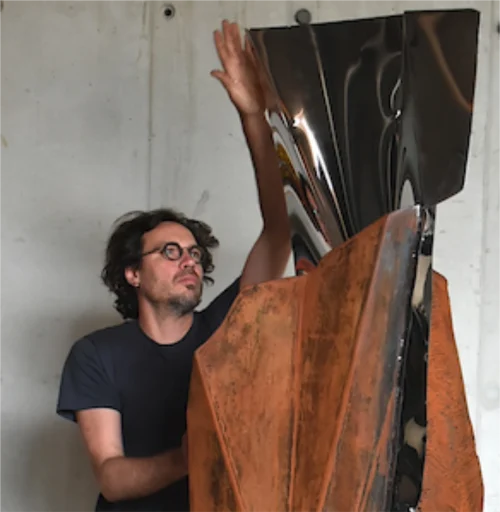
Julien Allegre was born in 1980 in Arles. He lives and works in Provence. He had originally intended to pursue a career in mechanics, but in 2001 he chose to devote himself entirely to sculpture. Self-taught, he has had no formal training: his hands learnt directly through working with metal, which has enabled him to forge his own distinctive style, recognisable at first glance.
Recycling: a revelation in Senegal
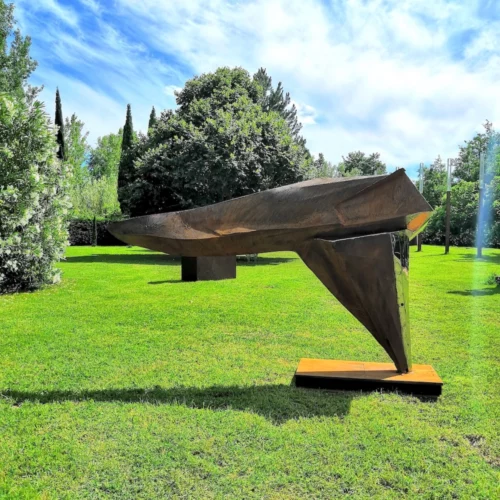
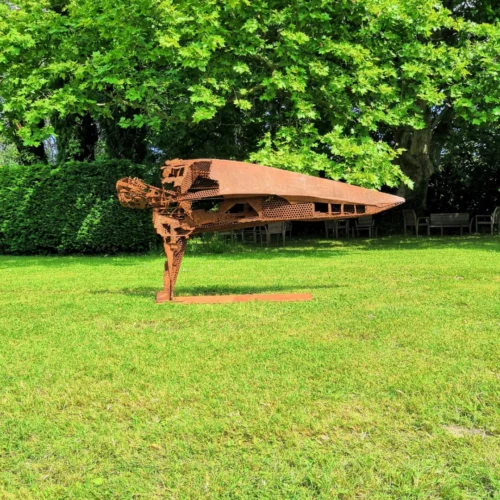
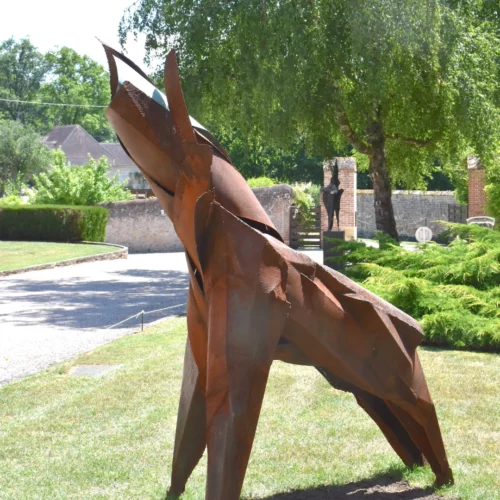
His stays in Senegal changed his relationship with materials. By observing local craftspeople, who are masters in the art of upcycling, he discovered that scrap could become valuable. Since then, he has been working with steel and other scrap metals, which he cuts, hammers and welds to transform them into anthropomorphic figures. Metal is no longer merely a resource: it becomes a material steeped in history, given a new lease of life.
A dialogue between materials and eras
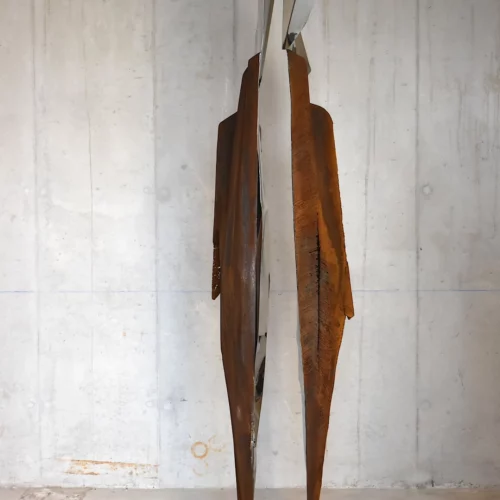
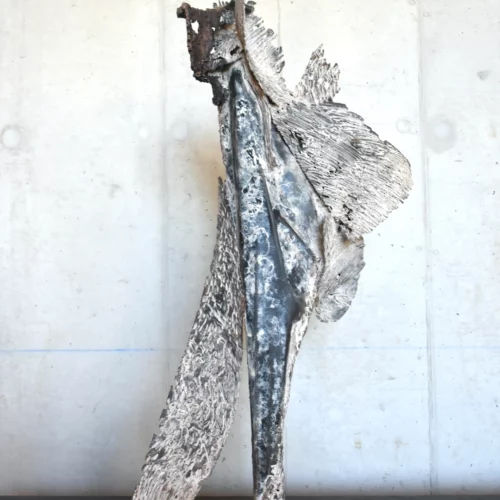
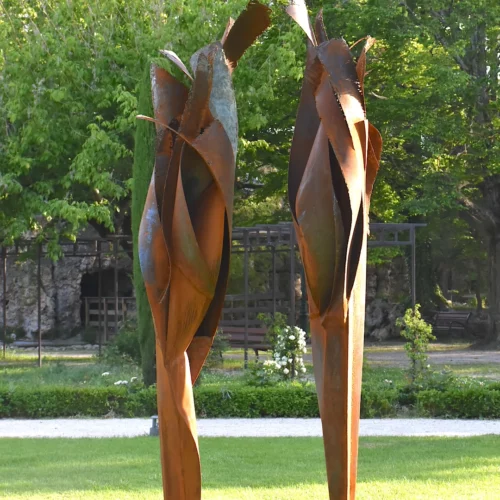
Over the years, he has expanded his range to include Corten steel, polished stainless steel, copper and bronze, which he refers to as ‘antique bronze’. Bronze lends a sense of preciousness and adds flecks of light to the heart of the steel. This combination creates a dialogue between the archaic and the contemporary. He embraces the scars, tears and visible welds: these are not flaws, but traces of the struggles waged with the material, and an echo of our own fragility.
Fossil Men, sentinels of time
His most iconic figures, the ‘Fossil Men’, are slender, faceless silhouettes that resemble skeletal branches. They stand as guardians of a bygone era and sentinels of the present. Displayed outdoors, they interact with the light and the landscape, and their patina changes over time.
Music: rhythm in movement
Julien Allegre is also a musician. The drums and the hang are his instruments of choice. Rhythm guides his work: the movement engages his whole body, and he listens to the resonance of the metal as he shapes it. This approach gives rise to an almost organic lightness in structures that are, nevertheless, made of steel. He has taken part in numerous exhibitions and performances in France and across Europe, and his works feature in private collections and foundations.
Critical perspectives
In his essay Julien Allègre, his scars of humanity, the writer Christian Noorbergen describes an art that is ‘barbaric and luminous’, which strips the masses of their substance, retaining only the shell and ‘the fragile skin of the essential’. For him, these works, which are both archaic and contemporary, remain ever-vigilant: this is the age of the great watchers, in the open air.
Read the article in the magazine